


New Research Projects
Projects links
- Building an evidence base for soya served in the National School Nutrition Programme
- Determining the race structure and genetic diversity of Leptosphaeria species causing blackleg disease of canola in the Western Cape
- Integrated management of blackleg of canola in the Western Cape by means of cultivar resistance and chemical control
- Monitoring of Sclerotinia stem rot of canola in the Western Cape
- Weeds associated with Sclerotinia sclerotiorum and the premature desiccation of sunflower to preserve at risk crop from sclerotinia head rot
- SAGL business plan: CAPEX
Building an evidence base for soya served in the National School Nutrition Programme
The National School Nutrition Programme (NSNP) is the government programme that provides one nutritious meal to learners in poorer primary and secondary schools. This programme promotes quality education by ensuring that children operate in a healthy environment. The NSNP provide 9 million learners with a meal each day, which for many of these children is their only meal of the day. A study conducted in 2018 found that children are unwilling to eat soya meals as served in the NSNP. In an attempt to make soya more appealing for learners while taking available resources into consideration a four phased approach was used: 1) literature review, 2) school visit, 3) recipe development and 4) sensory evaluation of recipes.
Information gathered from literature and school visits provided researchers with the necessary background to develop new recipes that will be more appealing to school going children. The four newly developed recipes (Beef Bolognese, Chicken Curry, Chili con Carne and one pot Biryani) were tested using a sensory panel to evaluate their acceptability in comparison to soya as currently served in the NSNP.
The results showed that soya as currently served in the NSNP is unappealing to learners and came out as the least preferred dish when compared to the new recipes. The Chili con Carne Soya Mince meal came out as the most preferred meal as its spicy flavour was appealing to the students followed by the Beef Bolognese Soya Mince meal and the One Pot Soya Biryani. Of the new recipes the Chicken Curry Soya Mince was the least preferred, but still more appealing than the original recipe.
Soya as currently served in the NSNP is unappealing to learners and lead to low consumption and increased food waste. The implementation of easy to follow large scale recipes may increase the consumption of soya within the programme as well as change the negative perception around soya.
Determining the race structure and genetic diversity of Leptosphaeria species causing blackleg disease of canola in the Western Cape
Surveillance of canola production in the Western Cape
Incidence and severity
The incidence of leaf lesions (percentage of plants with at least one leaf lesion) caused by Leptosphaeria were determined in 2021 at the rosette stage at Langgewens and Tygerhoek research farms and Uitkyk farm near Riversdale. Incidence measurements for the 2022 season is currently in process.
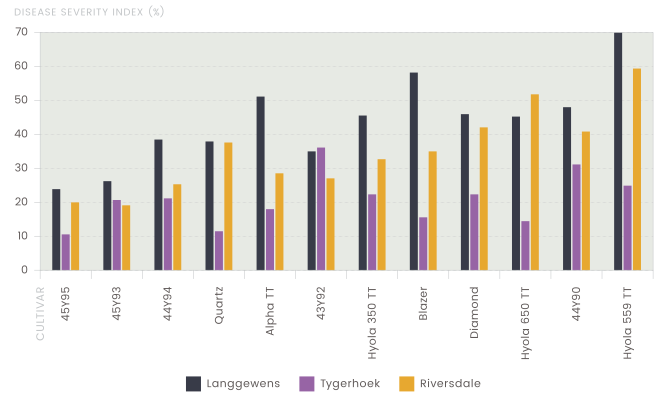
Blackleg incidence was slightly higher at Riversdal (87%) than at Langgewens (76%) and Tygerhoek (74%) (Fig. 1). Disease incidence was above 60% in all cultivars at all three locations, except for Hyola 350TT, which had the lowest disease incidence at all locations and Blazer at Tygerhoek with around 40% incidence. This may be due to cultivar Hyola 350TT having the most R-genes of all the local canola cultivars, namely: Rlm1, Rlm4, Rlm6, and LepR1.

Blackleg severity was also determined in these trails in 2021 two weeks before harvest using the method described by Peng et al. (2021). The severity for the 2022 will be conducted towards the end of the season.
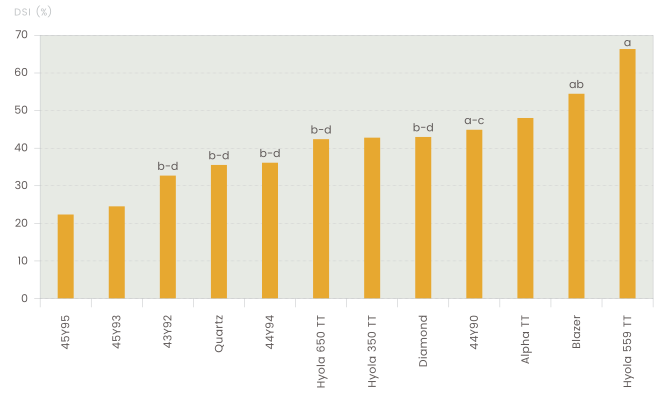
The results are summarised in Fig. 2 which was also submitted in the report by Dr van Coller on the integrated management of blackleg of canola in the Western Cape by means of cultivar resistance and chemical control. Overall, the highest disease severity was recorded at Langgewens (41%), followed by Riversdale (33%) and Tygerhoek (19%). Due to heavy rains and flooding during planting in May 2021, the trial at Tygerhoek had to be replanted in early June 2021, which negatively influenced the results of this trial. Results from Tygerhoek were therefore omitted from statistical analysis. Combined data from Riversdale and Langgewens indicated that the Clearfield cultivars 45Y95 (20%), 45Y93 (21%), 43Y92 (29%), 44Y94 (30%) had the lowest disease severity, while Blazer (44%), Hyola 650 TT (46%) and Hyola 559 TT (61%) had the highest disease severity. A statistically significant difference was found between these two groups of cultivars.
Sample collection
In the 2020 and 2021 seasons, symptomatic leaves (flowering stage), crown tissue (two weeks before harvest) and stubble (after harvest) were collected from the cultivar evaluation trials at six locations, including Langgewens, Hopefield and Eendekuil in the Swartland region and Tygerhoek, Napier and Riversdal in the Overberg region. The sampling of leaves from the 2022 season is currently in progress and crown and stubble will also be collected at the end of the growing season.
To investigate whether seed is a source of inoculum, different lots of retained seed was collected from 29 farmers in the Swartland and Overberg region. In addition to the seeds collected from farmers, seeds were collected from cultivar evaluation trials at five different locations which were retained from the 2021 season: Malmesbury (Langgewens), Riviersonderend (Tygerhoek), Riversdale, Hopefield, and Napier. Sampling of retained seeds from producers was done with a seed probe. To ensure representative sampling, the probe was used to collect seeds from large seed storage bags by inserting the probe at 5-6 different angles at different locations and dispensing the collected seeds into a container that was then used to mix the seeds. A volume of 200 ml sample was then taken and labelled, and stored at 5°C.
Surveys were designed to understand the behaviours of farmers around the storage and use of seed (Attachment 1). Ethical clearance was obtained from Stellenbosch University to conduct surveys throughout the 2022 growing season.
Due to typical blackleg symptoms noticed on some of the Brassica crops used as cover crops in the conservation agriculture system in the 2021 growing season, it must be determined to what extend these crops serve as an alternative source of inoculum and contribute to genetic diversity within the pathogen population. Sampling from symptomatic weed and cover crops species will be conducted in the 2022 and 2023 seasons.
Fungal isolation
In the 2020 season, 23 isolates were recovered from leaf samples and 806 samples from stubble. In the 2021 season, 544 samples were recovered from leaf samples and 236 samples from infected stems. Stubble isolations for the 2021 season is still in process. To date a total of 1609 isolates have been recovered (Table 1) within cultivar screening trials. Isolations from leaf samples of the 2022 season is also currently in progress, while isolations from infected stems and stubble will commence towards the end of the growing season. Isolations from seed will also be conducted from the seeds collected from farmers from the 2021 and 2022 growing seasons.
| Region | Location | Growing season | |||
|---|---|---|---|---|---|
| 2020 | 2021 | ||||
| Swartland | Langgewens | 0 | 248 | 105 | 93 |
| Hopefield | 0 | 34 | 10 | — | |
| Eendekuil | — | — | 103 | — | |
| Overberg | Tygerhoek | 0 | 193 | 196 | 77 |
| Napier | 9 | 132 | 62 | — | |
| Riversdale | 14 | 199 | 68 | 66 | |
| Source | Leaves | Stubble | Leaves | Stems | |
Characterization of genetic diversity present in Leptosphaeria populations
Confirmation of species identity
The DNA of isolates were screened with species-specific as described by Liu et al. (2006). To date 1023 samples were confirmed as L. maculans from the 2020 and 2021 growing seasons. No isolates were thus far identified as L. biglobosa.
Population genetics study
Thirty-five isolates collected were sent for whole genome sequencing to Dr Angela van de Wouw at the University of Melbourne, Australia. These isolates will be included in an international Leptosphaeria maculans population study and the information gained through this study will be made available for comparative genomics.
A representative subpopulation of isolates of 20 isolates from each sampling location per growing season will be selected for whole genome sequencing, instead of using microsatellite markers that were originally envisioned in the proposed project. The genome sequences will be used to determine mating type, to construct a phylogeny, to identify avirulence genes and to determine patterns in migration in the South African L. maculans population. Much more information can therefore be obtained from whole genome sequencing, compared to the microsatellite markers.
A subset of 100 isolates have been chosen from the 2020 populations and DNA extraction is in progress. Fifty isolates each from the 2021 and 2022 growing season will also be included in the analysis at a later stage. Some samples isolated from symptomatic weed and cover crop species will also be included in the population genetics study.
Characterisation of pathogenic potential of L. maculans isolates
PCR identification of known avirulence genes
The DNA of isolates selected for the population genomics study, as well as isolates collected from alternative host species, will be used to screen for the presence or absence of avirulence genes before it will be sent for whole genome sequencing.
Pathogenicity testing
Due to the difficulties in availability and import of seed of differential hosts needed for race identification, the race identity will be inferred by the absence and/or presence of the known avirulence genes from the whole genome data generated in the population genomics study, as described by Chen et al. (2021).
Integrated management of blackleg of canola in the Western Cape by means of cultivar resistance and chemical control
Evaluation of canola cultivars for blackleg resistance
Greenhouse evaluation
According to the project proposal, greenhouse evaluation of cultivar resistance will commence in 2022. However, after reassessing the objectives of this project, we decided that more meaningful data for canola producers will be generated by including an additional field trial for cultivar resistance evaluation than by conducting greenhouse trails, to ensure that the important production regions are included in the resistance evaluation. A field trial to determine cultivar resistance has thus been established at Waterboerskraal farm near Hopefield in May 2022 and will continue from 2023 onwards. This is in addition to the field trials which started in 2021 at Langgewens research farm (Moorreesburg, Swartland) and Tygerhoek research farm (Riviersonderend) and Uitkyk farm (Riversdale) in the southern region of the Western Cape.
Field evaluation
To evaluate the blackleg resistance of cultivars that are commercially available in South Africa, three cultivar trials were established in April/May 2021. The three locations were Uitkyk farm (Riversdale), Tygerhoek research farm (Riviersonderend) and Langgewens research farm (Swartland). A total of twelve cultivars were planted and blackleg severity was evaluated two weeks before harvest using the method described by Peng et al. (2021). The Blackleg disease severity index (DSI) is calculated as a percentage. The higher the percentage, the more severe the blackleg infection. The overall DSI were highest at Langgewens research farm, followed by Uitkyk farm and Tygerhoek research farm. Due to heavy rains and flooding during planting in May 2021, the trial at Riviersonderend had to be replanted in early June 2021. This, however, is an unfavourable time for planting canola in the Overberg region and the plants subsequently did not develop optimally, which negatively influenced the results of the trail. Therefore, the results from Tygerhoek were not included in the statistical analysis. When the data from Uitkyk farm and Langgewens research farm were combined, the Clearfield cultivars 45Y95, 45Y93, 43Y92, 44Y94 had the highest resistance while Blazer, Hyola 650 TT and Hyola 559 TT had the lowest resistance. A statistically significant difference was found between these two groups of cultivars. A summary of the cultivars evaluated, and the results obtained from blackleg severity ratings are presented in figure 1.
Evaluation of fungicides for control of blackleg
In vitro fungicide sensitivity and determination of EC50 values
According to the project proposal, In vitro fungicide sensitivity screening will begin in 2022, and is planned to commence in July 2022. We will make use of a high throughput screening technique as described in Troskie et al. (2012), which will allow us to include a larger collection of Leptosphaeria isolates. Results from this Objective will be included in the next progress report, relevant to this period.
Field evaluation
According to the project proposal, greenhouse evaluation of fungicides will commence in 2022. Similar to Objective 1.1., however, we decided that more meaningful results for canola producers will be generated by conducting field trials at the same locations mentioned for the cultivar evaluation. The first fungicide trails were therefore planted at four locations in April/May 2022 and included 6 different fungicides. More information on these trails will be included in the next progress report relevant to this period.
Monitoring of Sclerotinia stem rot of canola in the Western Cape
Sclerotinia stem rot (SSR) of canola is a notoriously difficult disease to manage, due to the pathogen’s very wide host range, and the ability of survival structures (sclerotia) to survive in the soil for many years (Derbyshire and Denton-Giles, 2016). The aim of this project is to develop industry orientated strategies to manage Sclerotinia stem rot (SSR) of canola for the Western Cape. Development of these management strategies is, however, dependent on collecting relevant data at numerous locations throughout the Province, including climate data captured in canola fields and information on production practices. One of the strong points of this project is the fact that data is extracted from existing trials. The research trials were planted and maintained and SSR monitoring could be executed as planned. The Tygerhoek systems trial will be adjusted from 2022 to incorporate a Regenerative trial and the Sclerotinia Monitoring project will be adapted to accommodate evaluation thereof. Collected data can then be used for disease modelling, with the aim of developing a disease forecasting model for the Western Cape, which will inform producers of periods of high disease risk, thereby enabling producers to take mitigating steps.
Data collected in the Western Cape falls in two categories:
- Disease incidence and geographical distribution of SSR in canola producing areas in the province;
- Data on factors contributing to disease development.
Disease Incidence
Commercial farms
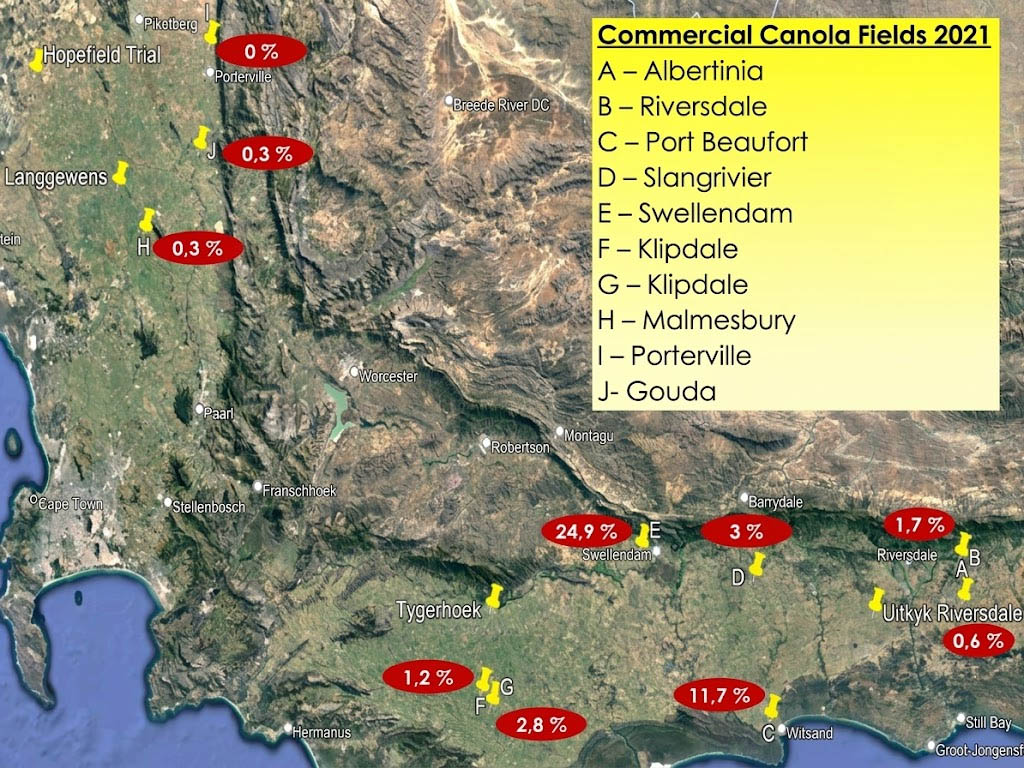
SSR incidence were determined on 10 commercial farms in 2021. The disease incidence was determined pre- and post-harvest. However, since pre-harvest sampling entails the extraction of whole plants, this was done only at selected locations. Pre-harvest sampling highlighted yield losses suffered due to SSR. Infection rates ranged from 0% at Porterville to 25% at Swellendam, with monetary losses due to SSR for these 10 farms ranging from R125 to R3 060 per hectare. (PRF price index, December 2021). Post-harvest evaluation took place on the exact spots as the pre-harvest sampling. The occurrence of infected stubble post-harvest highlights that new inoculum has developed at a particular location, indicating that the disease can re-occur in future under conducive conditions. The disease incidence ranged from 0.2% at Albertinia to 17.3% at Port Beaufort (the three Swartland locations had very low pre-harvest infections, consequently no post-harvest evaluations were done there). Results are presented in Fig. 1. Take note that disease management practices like fungicide applications were implemented by the producers at all these sites.
Existing field trials
Disease monitoring was also executed within existing field trials at three fixed monitoring sites, namely Uitkyk farm (Hessequa district), Tygerhoek research farm (Riviersonderend, Overberg district) and Langgewens Research Farm (Swartland district), to determine the effect of long term crop-rotation systems, different cultivars, tillage, seeding density and timing of fungicide applications on SSR incidence. Results are presented in Table 1.
A comprehensive conclusion for the effect of rotation systems on SSR incidence will only be available after collecting more data in upcoming years.
Evaluation of the disease occurrence amongst the various cultivars was done only to establish whether there were any differences, as these evaluations were done post-harvest and the cultivar trials were not designed for disease monitoring purposes. Differences in SSR incidence between cultivars detected was motivation to compile a trial plan for the 2022 season where all commercial cultivars will be evaluated on an equal bases (i.e., no fungicide treatment will be applied and the resultant infection rates of the various cultivars will be determined). Various industry enquiries about the disease susceptibility of different cultivars necessitated the inclusion of such a trial in the 2022 season.
Due to very low levels of infection in the Langgewens tillage trial, its results are not shown in this summary. At Tygerhoek heavy rainfall led to replanting at a very late stage in the season and therefor the optimum time for disease development was missed and no evaluation of this trial was done. A tillage trial at Hopefield was also evaluated, but infection rates were also very low.
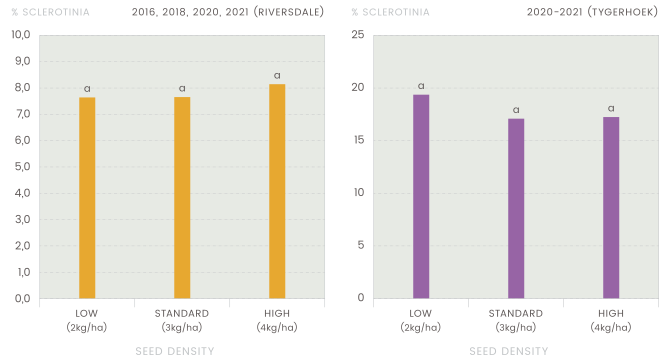
Results of the effect of seeding density on SSR disease incidence from the previous four years at Uitkyk farm (Hessequa district) and two years at Tygerhoek research farm (Overberg district) was statistically analysed and the findings are summarised in Fig. 2. The data sets included seasons with both high and low infection rates. Seeding density had no statistically significant (P > 0.05) on SSR incidence at either of these two locations. No further seeding density trials are planned for the near future, although plant densities will still be recorded routinely for every evaluated site.
Mixed results were obtained from spraying fungicide at different flowering stages. More research needs to be done on this subject.
Factors contributing to disease development
The various factors that contribute to the disease were collected at all of the above mentioned localities. This includes flowering dates, plant density, climatic data (% relative humidity and temperature, captured with a suitable data-logger in the leaf canopy on an hourly basis, as well as rainfall), tillage practices, cultivar and fungicide applications. This data, along with the SSR incidences mentioned in the previous section, is needed for the development of a disease forecasting model for the Western Cape.
Rainfall
Since soil wetness is an important factor in the formation of apothecia (fungal fruiting bodies) which releases the ascospores which cause infection, rainfall during the flowering period is of great significance. Rainfall data is available for all sites evaluated, but to save on space, rainfall data for the existing field trials are presented in Table 1. It would be expected that areas with higher rainfall during flowering would incur higher SSR infections, but as can be seen with the 2021 results, this was not the case for Tygerhoek and Langgewens. This confirms that a combination of various factors determines the incidence of SSR.
| Pre-harvest sampling | Post-harvest sampling | ||||
| Timing of fungicide application | Seeding density | Long-term crop rotation | |||
| Description | SSR Incidence (%) | Description | SSR Incidence (%) | Description | SSR Incidence (%) |
| UITKYK (HESSEQUA) – 141.8mm RAINFALL | |||||
| Control | 39.1 | Low | 41.8 | W-C | 3.6 |
| First petal | 36.2 | Standard | 34.2 | B-L-W-W-C | 7.4 |
| 30% flowering | 35.1 | High | 34.4 | W-L-W-C | 8.1 |
| B-W-C | 10.8 | ||||
| B-CC-C | 16.8 | ||||
| TYGERHOEK (OVERBERG) – 103.6mm RAINFALL | |||||
| Control | 13.8 | Low | 11.8 | P-W-P-C | 0.2 |
| First petal | 17.8 | Standard | 9.1 | W-P-P-C | 10.7 |
| 30% flowering | 3.3 | High | 14.0 | W-B-L-W-B-C | 18.9 |
| LANGGEWENS (SWARTLAND) – 109mm RAINFALL | |||||
| Control | 4.7 | Low | 6.4 | W-W-W-C | 0 |
| First petal | 5.3 | Standard | 3.3 | W-L-W-C | 0 |
| 30% flowering | 2.4 | High | 2.7 | P-W-P-C | 2 |
| W-W-L-C | 3.5 | ||||
Weeds associated with Sclerotinia sclerotiorum and the premature desiccation of sunflower to preserve at risk crop from sclerotinia head rot
Introduction
Extensive losses are caused by Sclerotinia sclerotiorum infections of sunflower heads, of which the extent is prevalent in all sunflower production regions. Limited management strategies exist, mostly these focus on agronomics practices to reduce disease establishment. There are no resistant cultivars available, and no fungicides registered for use on sunflower. Over 40 South African weeds are known as alternative hosts for the fungal pathogen, which serve as a seasonal bridge and potential sink for inoculum build-up. Many producers have reached out to Ms Rothman, Dr Ceronio and Dr Janse van Rensburg regarding the current practice to desiccate sunflower, although there is an unknown response of yield factors (weight and quality), in the presence of Sclerotinia head rot.
Value for industry
- The most "recent" research on weeds and Sclerotinia is Phillips (1992) in South Africa.
- There is no literature on desiccation of sunflower in the presence of Sclerotinia head rot.
- It would be ideal to identify the most profitable time to apply desiccation considering critical host growth stages.
- The limited management of Sclerotinia diseases requires out the box thinking.
Problem statements
- Objective 1: Weed Science Focus
Identify and confirm alternative weed hosts of Sclerotinia Sclerotiorum in South African production systems. - Objective 2: Agronomy Focus
Application of desiccation agent to sunflower in the presence of Sclerotinia head rot of sunflower to limit potential yield and quality losses. - Objective 3: Economics Focus
What are the economic risks/benefits associated with premature desiccation in the presence of Sclerotinia head rot. - Overlapping Objective
Survey of current sunflower production practices in South Africa.
Methodology
Objective 1: Weed science focus
Component 1: Geographic survey
- Area
– Mpumalanga, Gauteng and portion of Free State, Northern Cape LR – KwaZulu-Natal and portion of the Free State MC – North-West BjvR - Inclusion of CA vs conventional
- Host crops
– Canola, cabbage, sunflower, soybean, potato - Producer demographic – Commercial & Emerging
- Overview of data parameters
Season Locality Latitude Longitude Primary Host Weed Common Name Weed Scientific Name Population within x
distance from host - Analytical framework
- Distribution and frequency maps
- Spatial/temporal or spatio-temporal study
- Distribution and frequency maps
Component 2: Pathogenicity test(s)
- qPCR of samples collected from field
- Select most representative weeds to be grown in the glasshouse and tested for pathogenicity
- Analytical framework
- Variables to measure
- Molecular confirmation of susceptible weed hosts
- Data analyses
- Variables to measure
Objective 2: Agronomy Focus
Component 1: Potential Field Trial Sites
- Delmas: Artificial inoculations
- Western Free State location – birds are rather problematic
- Clocolan: Natural infection
- Two cultivars (one popular and one very susceptible)
- Three planting dates (early, optimum, late)
- Evaluate host growth stages and disease progress
- Desiccation agent applied at different critical host growth x infection stages, potentially three applications
- Four replicates (as fail safe for no germination or bird predation)
- Determine yield parameter losses
- Weight
- Quality (usually associated with earlier plantings)
- Preliminary field trial layout: Randomised block design with a split-split plot
- Analytical framework
- Data analyses: ANOVA, regression and plot visualisations
- Overview of data parameters:
Locality Planting Date Cultivar Replicate / Block Application Date Number Infected Heads Severity Per Head Sclerotia Pre-treatment Sclerotia Post-treatment Yield Quality
Objective 3: Economic Focus
Researchers are dependent on objectives 1 and 2 for data required for economic analysis to complete objective 3.
Cost calculations regarding the following in terms of Agriculture:
- Impact (producer income implications) in terms of occurrence of Sclerotinia head rot of sunflower.
- Impact of different time periods of desiccation, based on the sunflower plant state of infection and physiological stage of the sunflower crop.
- Incorporating lower yields and quality problems due to Sclerotinia on the profitability of sunflower production (focus areas still needs to be provided).
- Providing a tool, collaboration with other researcher associated with this product, for sunflower producers to aid in decision-making if Sclerotinia does occur whether or not to desiccate the sunflower crop.
Methodology
Combining data collected from field trials and setting up enterprise budgets to determine economic risks associated with desiccation. Enterprise budgets will be setup for the following scenarios:
- Scenario 1
Normal (optimal and healthy) conditions without Sclerotinia head rot. It is expected that the gross production value will be higher in the absence of sclerotinia. - Scenario 2
Occurrence of Sclerotinia without any control measures. It is expected that the gross production value will be negatively influenced when sclerotinia occurs. - Scenario 3, 4, 5 etc.
Occurrence of Sclerotinia with desiccation agent applied at the three different potential application stages that will be provided. It is expected that the total variable cost will increase due to the cost associated with the application of the desiccation agent. This will have a negative impact on the breakeven yield and price.- Phase 1:
Setting up theoretical enterprise budgets for the different areas/provinces where the trails will be performed and check whether the theoretical enterprise budgets correspond to exiting enterprise budgets for the different areas provinces. - Phase 2:
At this stage the data/results from the trails will be provided and will be used in the enterprise budget that was created in phase 1. - Phase 3:
The results from phase 2 will be used to setup a model in Excel that can provide a risk analysis for producers to assist them in decision making. However, time permitting Lisa Rothmann will assist Markus with the use of R and we will make this available on an open access platform. - Overview of data parameters:
Pre-harvest Cost Harvest Cost Gross Margin Gross Production Value Margin Above Specified Cost Yield Quality Break-even Yield Break-even Price
- Phase 1:
Results envisaged
- Understanding of alternative hosts and distribution thereof.
- Revision of on-farm weed management practices.
- Best practices to limit economic losses associated with premature desiccation of sunflower crops.
Limitations
- Participation of producers to sample from fields
- Overcome by using the network of producers build between researchers and the South African Sclerotinia Research Network
- Application of desiccant to the sunflower
- Airplane, Big-boy sprayer or drone
- If the trial cannot be conducted in Delmas, we will use the Wellington site, birds can be an issue here but this can be overcome with using orange bags which is standard practice within the Agronomy division.
Publications and tangible outputs
- M.Sc Agric student participation
Farmers Days (Delmas, in March we have an annual farmers day ~200-300 producers). - Publishing popular articles on sclerotinia.co.za, appropriate magazines (Oilseed Focus, GrainSA and Pula Mvula).
At least two publications in academic journals. - Local conferences.
Research repository and compendium on Open Science Framework (and GitHub potentially).
SAGL business plan: CAPEX
The business plan submitted by the SAGL in respect of the establishment of a sustainability model for the SAGL as a laboratory to provide services to the agricultural industry was supported and the following funding was approved:
- 2019/2020 R896 916
- 2020/2021 R993 782
- 2021/2022 R149 186
- 2022/2023 R53 375